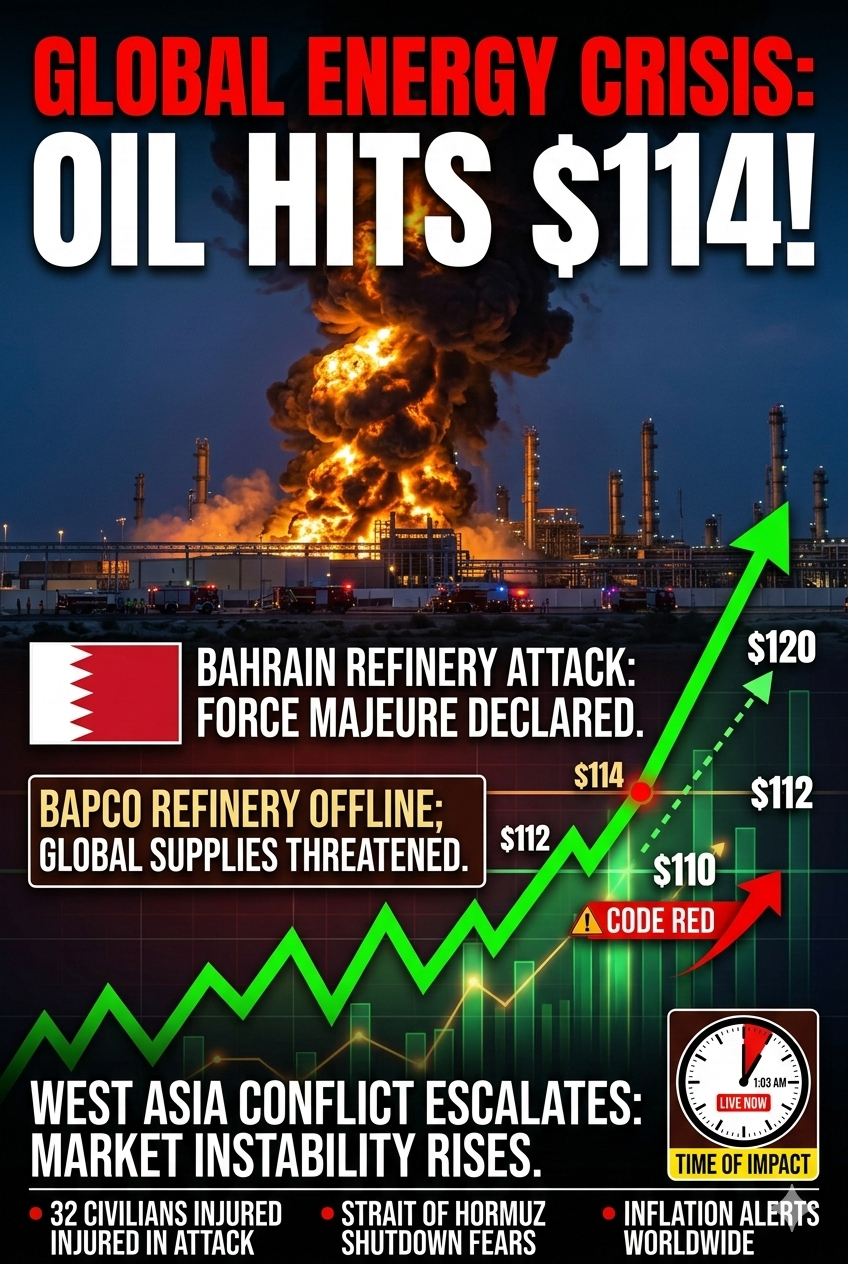
MANAMA/LONDON:- The global energy market was sent into a tailspin on Monday as Brent crude oil prices shattered the $114 per barrel mark—the highest level recorded since the 2022 Russia-Ukraine conflict. The surge comes on the heels of a devastating drone attack on Bahrain’s primary oil infrastructure, forcing the kingdom’s state-owned energy giant, Bapco Energies, to declare a state of force majeure.
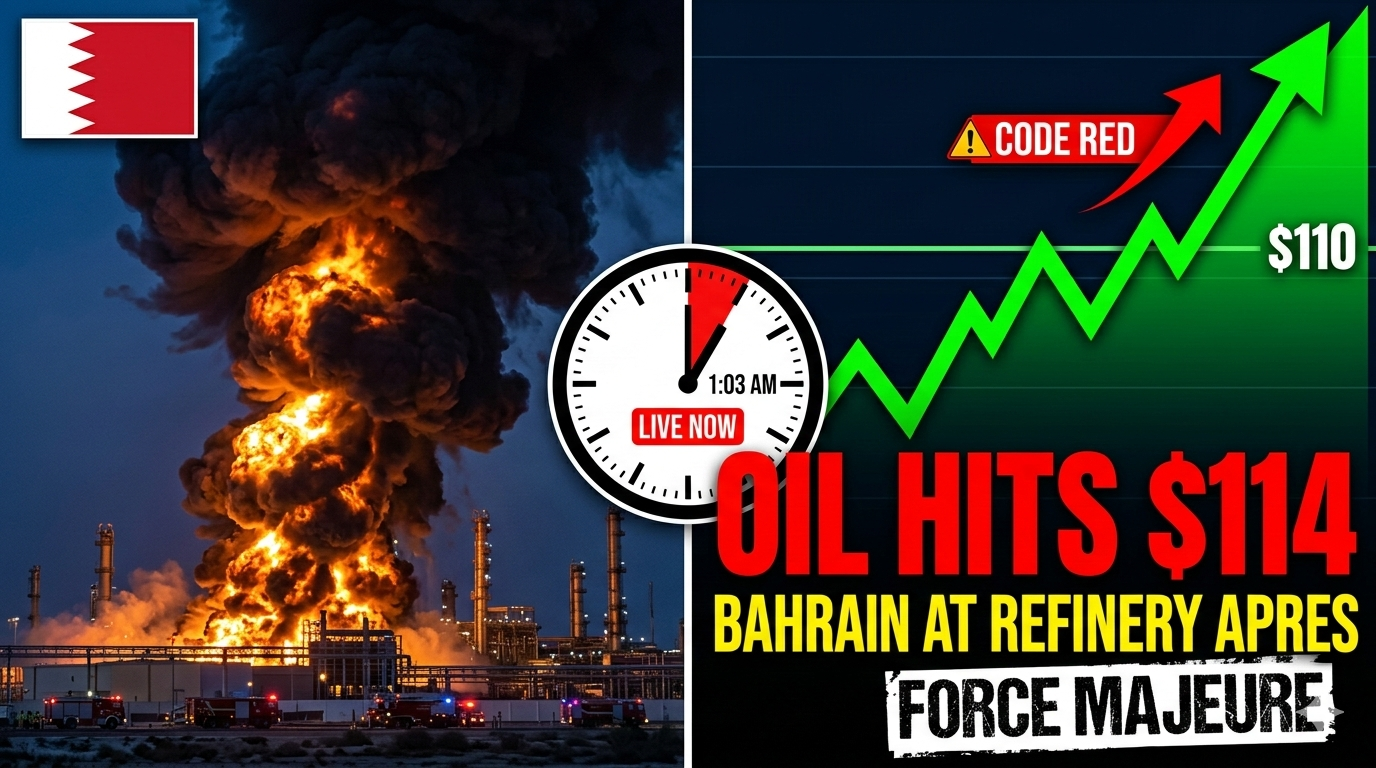
The Attack: Flames Over Sitra
In the early hours of Monday, March 9, 2026, a wave of suspected Iranian drones targeted the Sitra refinery complex, Bahrain’s only refinery and a cornerstone of the nation’s economy. The strike set several units ablaze, sending massive plumes of black smoke into the sky that could be seen for miles.
While Bahraini authorities confirmed that the fires were eventually brought under control, the physical damage to the 405,000 barrel-per-day facility was significant enough to halt operations. In a statement via the Bahrain News Agency, Bapco Energies invoked the force majeure clause—a legal move that exempts the company from its contractual shipping obligations due to “extraordinary circumstances” beyond its control.
Market Reaction: A ‘Code Red’ for Global Economy
The impact on the trading floor was immediate and “violent.”
Brent Crude: Jumped over 15% in a single session, peaking at $115.20.
Stock Markets: Global indices, including the Sensex and the S&P 500, plummeted as investors feared a return to the “inflationary spiral” of years past.
The “War Premium”: Analysts suggest that the price hike isn’t just about the Bahrain refinery; it’s a “geopolitical risk premium” as the West Asia conflict threatens the Strait of Hormuz, through which 20% of the world’s oil passes.
“We are looking at one of the most sudden increases in the cost of energy to the global economy in history,” noted one leading economist. “If these disruptions persist, $130 per barrel is no longer a ‘worst-case scenario’—it’s a high probability.”
Human Cost and Regional Fallout
Beyond the economic shock, the attack on the Sitra area resulted in 32 civilian injuries, including four serious cases. The health ministry reported that a 17-year-old girl and a two-month-old infant were among those wounded by debris from the strikes.
Bahrain is not alone in its struggle; neighbouring Kuwait and Qatar have also issued similar warnings or production cuts as the conflict between the US, Israel, and Iran enters its second week.
What Happens Next?
As Bapco Energies works to assess the full extent of the damage, the world watches the Gulf with bated breath. For countries like India, which are heavily reliant on Middle Eastern crude, the surge threatens to hike fuel prices at the pump and disrupt supply chains.
Bapco has assured that local fuel demand will still be met through contingency reserves, but the international market remains on edge. The big question remains: Will other OPEC+ nations ramp up production to stabilize the market, or is the world heading toward a 2026 energy “Stagflation”?
For more deep dives into the West Asia crisis and its impact on your pocket, stay tuned to our latest updates.